The Importance of Ventilatory Support in Modern Veterinary Anesthesia
As a veterinary anesthesiologist, I am often asked by clinicians about the value of adding an anesthesia ventilator to their practice. For any clinic performing more than routine spay and neuter procedures, having the ability to support ventilation during anesthesia can significantly improve both patient safety and overall quality of care. Most drugs used to induce and maintain general anesthesia lead to some level of respiratory depression. Even healthy patients can develop marked hypoventilation, which may result in hypercapnia, hypoxemia, and in severe cases, death if breathing is not properly supported. Patients affected by pulmonary disease are even less capable of tolerating these changes, making early detection and careful management of complications essential.
In clinics that do not have a ventilator, the anesthetist must be prepared to deliver positive pressure ventilation manually with the reservoir bag until the patient stabilizes and resumes spontaneous breathing. This responsibility can be demanding during the peri anesthetic period, which is why many veterinarians begin to consider adding a ventilator to their equipment. For those planning to perform intrathoracic surgeries or procedures that require the use of paralytic agents, mechanical ventilation becomes an essential component of patient care.
Training and Confidence for the Clinical Team
Choosing a ventilator can feel overwhelming. There are many options available, units can be costly, and without prior experience it can be difficult to determine which system best fits the needs of a practice. We consistently recommend selecting a ventilator that is intuitive, straightforward to set up, and equipped with reliable safety features.
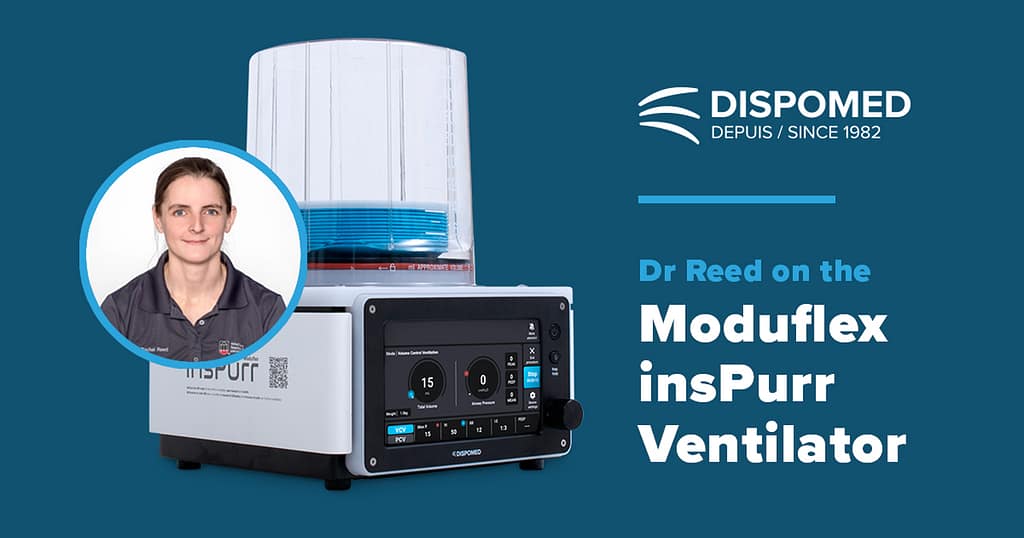
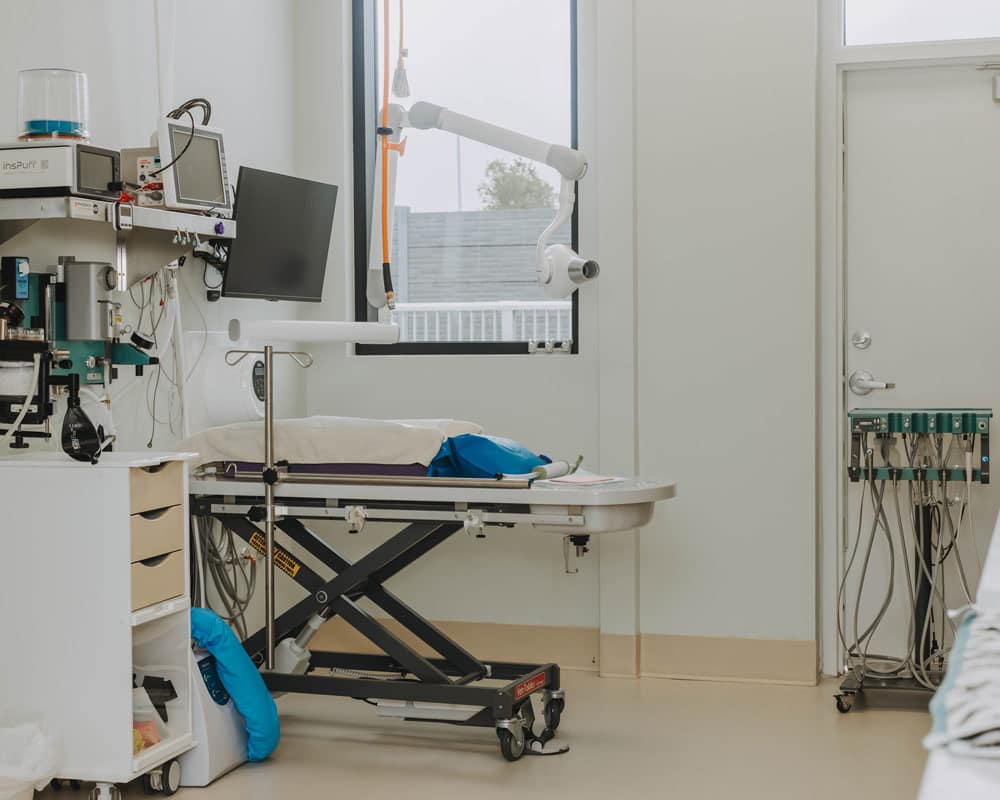
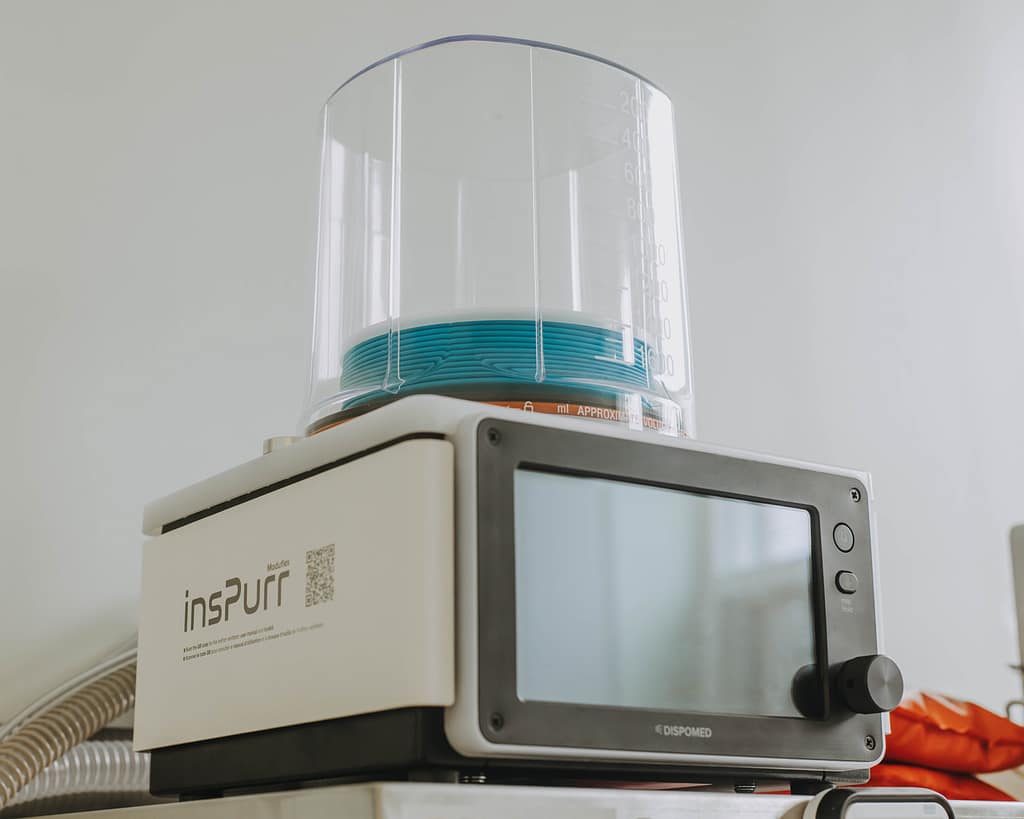
Introducing a new ventilator can also feel intimidating for team members who have not worked with one before. These systems are sophisticated, and improper use can place patients at risk. Ventilators vary widely in their design, power source, driving mechanism, and control systems. After using the Moduflex InsPurr ventilator for several weeks in a clinical setting, it quickly became a preferred recommendation. The unit was remarkably simple to install, features a clear and user friendly touch screen interface, and technicians and students adapted to it with ease.
A Simpler Approach to Ventilation Without Driving Gas
One of the first aspects that stood out with this ventilator is how it removes several elements that often make other systems more complex or less safe. Most notably, it does not require a driving gas source.
Traditional veterinary anesthesia ventilators use a dual circuit design, where a compressible bellows sits inside a housing chamber. A breath is delivered by increasing pressure inside the chamber, forcing the bellows downward. Historically, this has required connection to a pressurized oxygen source. This setup means the anesthesia machine and ventilator must share oxygen from a cylinder or central supply. Clinics that rely on an oxygen concentrator for their anesthesia machine often need to add a separate cylinder in order to operate a ventilator.
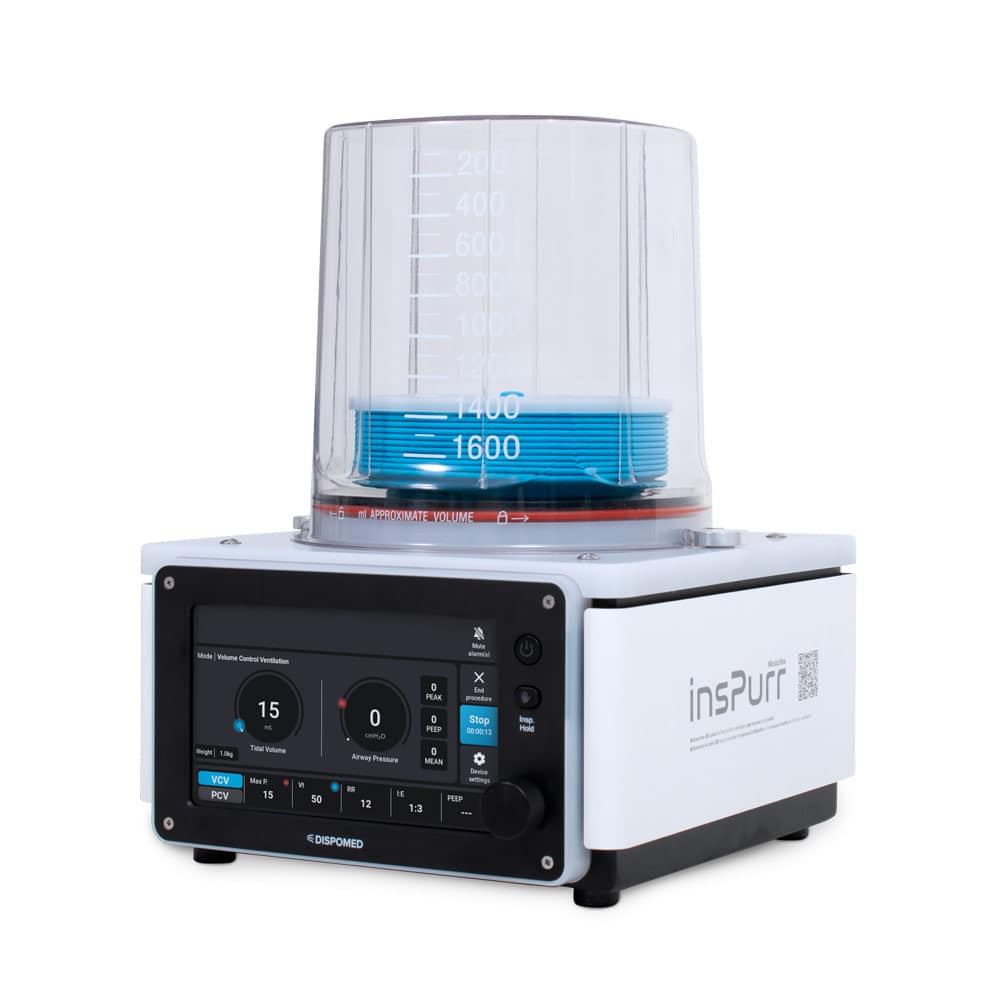
The InsPurr also uses a dual circuit design with a bellows inside a housing chamber, but instead of relying on an external gas source, it uses an internal turbine to create the pressure needed to deliver each breath. This simplifies installation and daily use, removes the expense and maintenance associated with a driving gas supply, and allows clinics that use oxygen concentrators to operate the ventilator without adding a separate gas source.
Another benefit of the turbine driven system is how quiet it is during operation, helping maintain a calm and low stress working environment.
Intelligent Automation for Precise and Effortless Ventilation
Many conventional ventilators are adjusted using front mounted knobs that control breath frequency and gas flow into the bellows chamber. Achieving the right settings often involves some trial and error, and confidence usually develops only after repeated use.

The InsPurr removes much of this uncertainty by simplifying the process. The system performs the calculations automatically and only requires the user to enter the patient’s weight. From this single input, it determines appropriate ventilation parameters such as tidal volume, respiratory rate, and peak inspiratory pressure. These values are preconfigured to provide reliable support while still allowing the anesthetist to fine tune settings when needed.

The unit also offers both volume controlled ventilation and pressure controlled ventilation. This allows the clinician to manage the size of each breath by setting either the tidal volume or the peak inspiratory pressure. In both modes, integrated safety features help prevent the delivery of breaths that are too large, reducing the risk of lung injury.

Another valuable function is the ability to apply Positive End Expiratory Pressure with a single button. This can be especially beneficial for patients experiencing reduced oxygenation due to atelectasis during anesthesia.

Because the system is so straightforward to operate, it helps streamline workflow within the clinic. Skilled anesthetists can focus on other important aspects of patient monitoring and care instead of continuously providing manual ventilation. The design also uses a single bellows for both small and large patients, removing the need to change components and further improving efficiency.
Advanced Safety Features and Built In Peace of Mind
Safety is another area where the InsPurr stands out. The large touch screen display provides a clear and comprehensive view of the patient’s ventilation status, making it easier to notice subtle changes and respond quickly.
The ventilator includes a strong alarm system with both high and medium priority alerts that activate when parameters fall outside of set ranges. It also features internal respirometry that measures lung volume, helping ensure each breath is delivered at an accurate positive pressure.
A step that is often overlooked or performed incorrectly with many ventilators is the pre use leak check. The InsPurr guides the anesthetist through this process immediately when the machine is powered on, essentially performing its own verification. This helps confirm that the check is completed properly and that there are no leaks before the ventilator is used on a patient.
Overall, the InsPurr ventilator is an outstanding choice for veterinarians seeking a system that is simple to use while delivering advanced ventilatory support. After using it in a clinical setting, it quickly became clear how effective and practical it is, to the point where replacing existing ventilators with InsPurr units felt like the natural next step.